By Robert St. Martin
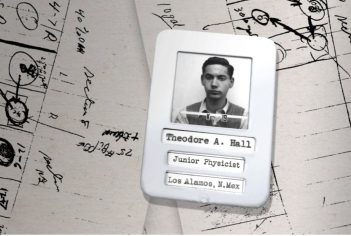
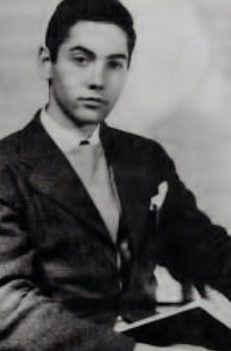
 Los Angeles, CA (The Hollywood Times) 8/8/23 – In Christopher Nolan’s Oppenheimer, a fair amount is made of Klaus Fuchs, the German theoretical physicist who passed secrets from Los Alamos to the Soviet Union. But nowhere in Nolan’s long film do we hear a mention of Theodore Hall, a “wunderkind” young physicist from Far Rockaway, New York City, recruited to the Manhattan Project as an 18-year-old Harvard senior who passed atomic secrets to the Soviets for what he later claimed as “compassionate” reasons. In a new film A Compassionate Spy, veteran documentarian and two-time Oscar nominee Steve James recounts the incredible true story of Ted Hall, a physics prodigy. Although initially enthusiastic about the program and his contributions to it, he found himself growing increasingly concerned that so much power being held in the hands of one country would prove to be too destabilizing and dangerous to a world still in the grips of World War II. Feeling a sense of moral responsibility, he, along with the aid of friend and go-between Saville Sax, passed along information regarding the development of the atomic bomb to Soviet intelligence.
 The leaking of atomic bomb secrets from the Manhattan Project to the Soviet Union is usually associated with Julius and Ethel Rosenberg, who were executed for espionage in 1953. But according to Steve James’s new documentary A Compassionate Spy, far more crucial secrets were smuggled to Soviet agents by the film’s subject, Ted Hall. While working at Los Alamos when he was only 18, Ted was initially proud of his research as a way of ensuring that the Nazis didn’t develop a bomb first. But he turned to espionage out of worry that leaving a weapon that powerful in the hands of America alone would be catastrophically destabilizing to the postwar world. Currently, this interesting film distributed by Magnolia Pictures is playing at the Laemmle Royal Theatre in West Los Angeles for only one week.
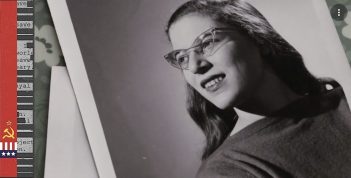
 A Compassionate Spy is in part the story of an idealistic teenager who risked the electric chair in order to keep American hegemony at bay. But even though Ted isn’t a household name, that story was largely told already by interviews Ted gave before his death in 1999 and a 1997 book, Bombshell whose authors are interviewed here in order to fill in more background detail. Given that, James focuses more intently on Ted’s character and family. This aspect of A Compassionate Spy is related in glowing terms by Ted’s widow, Joan, a fellow student at the University of Chicago whom he married after the war. Spiky, unapologetic, and passionate, Joan paints their romance in glowing and lyric language and describes his actions with stark simplicity: “Ted was trying to prevent a holocaust.”
Left unsaid, however, is the possibility that by speeding up the Soviet atomic weapons program out of his stated “compassion” for the Soviet people (who lost 20 million in World War 2), Ted was playing just as risky a game of détente as any of the Strangelovian Pentagon war gamers were at the height of the Cold War. A Compassionate Spyends with this title page: “This film is dedicated to all those who have risked their lives for peace.” This presents a somewhat more simplistic view of what Ted did. The dedication’s suggestion that his actions were that of simple and pure heroism leaves James’s documentary in tension with the more nuanced view that Ted seemed to have of himself.

True to James’s penchant for picking subjects he finds worthy of not just close attention but admiration, A Compassionate Spy doesn’t delve into the morality of Ted’s actions. Ted says near the end of the film that if he had known in 1944 about the true extent of Soviet crimes against humanity, he would have questioned what he was doing. He also sardonically describes his younger self as seeing the world through “pinkish” glasses. His mixing of wry asides with staunch idealism makes him a truly engaging central figure.
The film consists mostly of talking-head interviews with Joan and their daughters, interspersed with dramatic recreations of: Ted miserable at Los Alamos; Ted and Joan’s infatuation; Ted’s plotting with his friend Saville Sax, who the film suggests may have been the one to talk him into it. The glowing romanticism of Ted and Joan is sharply contrasted with the blaring propaganda stitched in by James to show the quick pivot of American media from a wartime pro-Soviet stance (clips from Michael Curtiz’s 1943 Stalin-pandering Mission to Mosco look especially sycophantic) to postwar anti-Commie hysteria.
James gets inside the fulminating, jingoistic wartime US ambience through dramatic recreations of college trysts and FBI shakedowns, as well as Hall’s final interviews – notably the CNN spot in which he eventually came clean. The anchor of the film is the testimony from Hall’s now elderly wife, Joan, that gives A Compassionate Spy a passionate payload, making it as much a love story as a political chronicle. “A nonconformist, keeping clear of everyone else’s nonconformity,” is how she sums him up. “Did I forget to say he was beautiful?” Joan Hall emerges here as forthright and defiant – where her husband, later dubbed “the quiet American”, was self-effacing. She provided the steel to their operation, insisting that Ted hold his silence at crucial junctures, including when the CIA appeared to offer an olive branch.
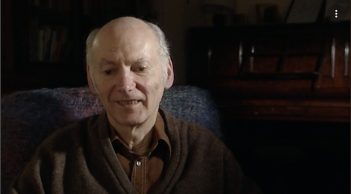
Joan was herself a brilliant woman who first attend the University of Chicago at age 15 and there met Ted. Some years later, after marriage and giving birth to three daughters, Joan decided to pursue advanced degrees in Russian and Italian at Cambridge University (when the Halls were living in England). Hall’s brother, Edward, developed the intercontinental ballistic missile for the military and it was destined to be carrying the payloads; it may have ultimately too damaging to the US nuclear program if the FBI’s dirt-digging covered its leading missile scientist in muck too.
This film is being distributed by Magnolia Pictures and currently screening at the Laemmle Royal in West Los Angeles. Filmmaker Steve James is known for his acclaimed documentaries as Hoop Dreams, The Interrupters, and Life Itself. One detail omitted here, though, is that Hall died of renal cancer, no doubt as a result of handling plutonium, but not before delivering some stark warnings about arms proliferation and the dangers of a potentially fascist America with its finger on the button.